A Better Man

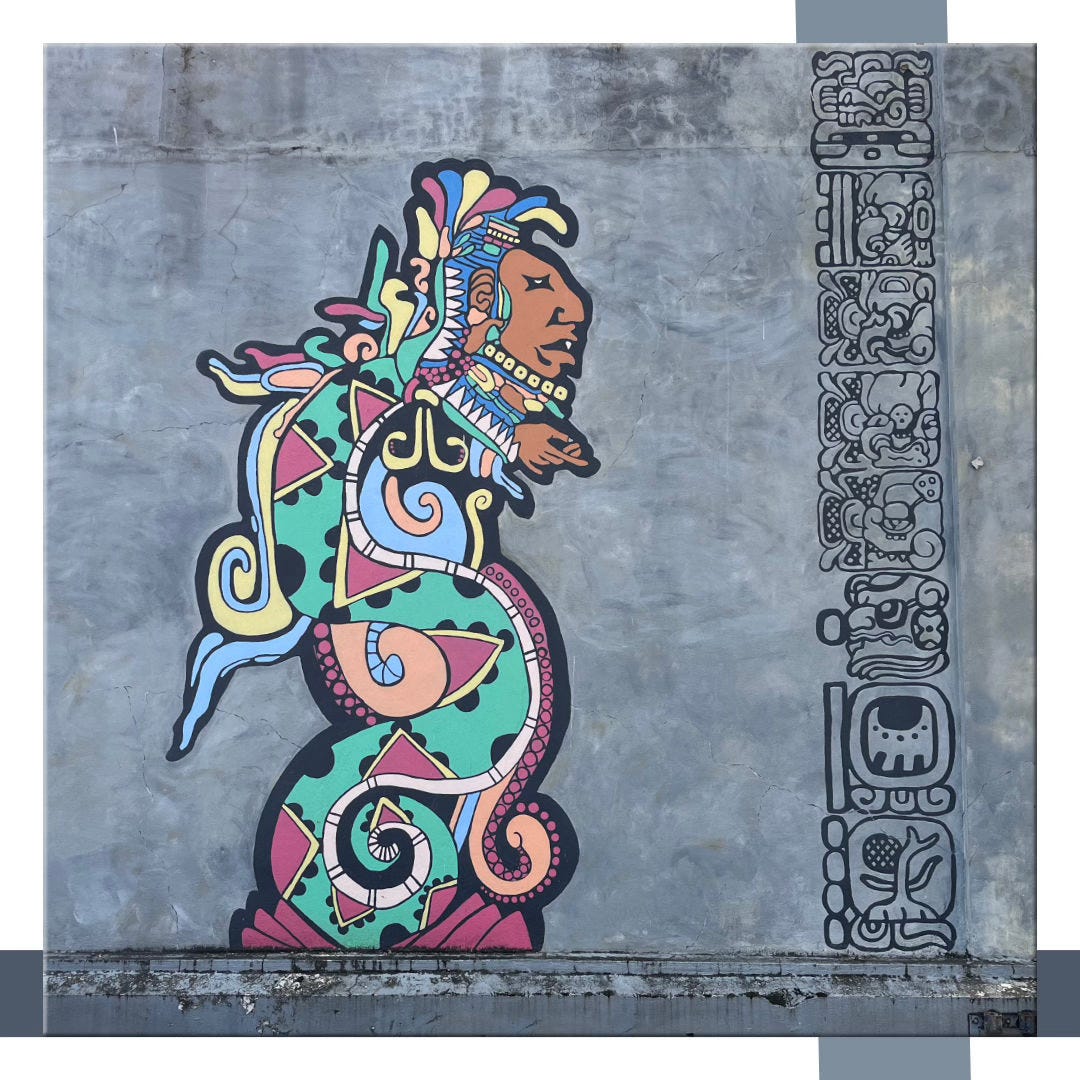
A long time ago in a land that no longer exists, a warrior was providing advice to his monarch. They stood in the personal living quarters of the Queen away from the more public meeting spaces of the palace. The decor of the palace was quite elegant in its simplicity. The tall ceilings, light colored walls, tall glass windows looking out onto the palace grounds gave the space an openness that felt modern. Tasteful art was hung on the walls strategically placed as an accent, not a draw. The primary draw was the Queen herself. She was dressed in a full regalia of royal attire which was grounded by a long gown of plain white silk. On top of that she wore a colorful sash of wool fibers finely woven into a traditional pattern of her family lineage. Most striking was her headdress. Forming a halo behind her head was a fan of long feathers from the various birds of the land. The large headdress plus her tall platform shoes gave the impression she was taller than she truly was. In her regalia, she was tall enough to look directly into the eyes of her General, commander of her army.
He, the General, was not looking at her. He had turned to look out the window to consider what the Queen was asking of him, against his advice. Her request had not yet become a command. He hoped it would not come to that as he looked out the window and watched a young girl about the age of six playing by herself in the palace courtyard below. This young girl was the General’s daughter. The General was raising his daughter by himself since her mother, his wife, died in childbirth. During that time the General was rarely separated from his daughter even as he tended to his work leading the Queen’s army. After the birth of the General’s daughter, the Queen supported him in raising the girl by providing three aides who served as nurses, nannies, and housekeepers. The aids, while barely beyond adolescence themselves, were good to the General’s daughter and helped her grow up with a stability that he could not provide on his own. It was rumored across the land that the Queen had taken the General for her lover. And while indeed they had been intimate from time to time, the meeting today was all business.
As the General watched his daughter below who was engrossed in her game of bouncing a small ball and picking up small stones between bounces, he said, “It would be suicide to engage the Fioden Army in battle. They far outnumber our soldiers, and their weapons are superior to ours. I again advise against taking military action.”
“But you are a superior strategist,” the Queen cooed. “You have never failed in battle. I know you won’t fail me this time.”
“I am not so sure,” he replied, then turned toward her. “Why is this battle so important to you?”
“Under your leadership of my army these past many years, our lands have grown as has my influence in the region. Word has it that King Fiode is near the end of his reign, near the end of his life in fact, and I wish to capitalize on this weakness,” she revealed.
A warrior knows when to brandish the sword and knows when to offer the silk. True strength lies in the knowledge that the threat of the sword is always available. Knowing when to use one or the other is the key to effective detente. He would not risk revealing his realization of the growing greed that he saw driving her decision making. Still, he had an obligation to her, to his soldiers, and to his daughter to give her accurate advice.
“Your Highness, with full respect for your authority and vision, I humbly advise that you refrain from invading the Fioden lands or at least delay until we can do additional reconnaissance on their army’s current capabilities,” he said with a bowed head.
“I can no longer wait!” she declared. “You will strike them tomorrow morning.”
He raised his head and looked deeply into her eyes for a moment longer than would be appropriate. She looked back at him unwavering. Then, he bowed and said, “By your command.”
With his head lowered and facing her, he withdrew himself from the Queen’s quarters.
That next morning, the army assembled in the blue-grey twilight and the cold autumn air. Five-hundred soldiers of men and boys barely ten years older than the General’s daughter formed in three columns of ten soldiers per row along a gentle hillside which sloped into a valley. The General walked among the rows as the soldiers spoke in hushed voices. With approving nods of his head, and sincere words of appreciation, the General emboldened the courage of his troops.
“You will honor us all today with your courage in battle,” he told one soldier as he clasped the man’s shoulders then wrapped his arm around him. The soldier smiled humbly and nodded his acceptance of the General’s compliment.
“We will see victory again today!” said a young soldier, a boy really.
The General smiled at the boy and said to him, “Your confidence is commendable.” Then, he turned and spoke to all the soldiers gathering around him. “They will put up a strong fight, do not be mistaken. But we will have the element of surprise on our side,” the General said confidently and moved on leaving them with a sense of hope.
The General exited from the corps of soldiers and walked up the hill to the rear where his daughter stood watching with her three aids. She wore a plain, dark blue dress with buttons down the front. Her aids wore simple, woolen dresses of the same color with hoods that covered their heads for modesty. She smiled at her father as he approached. He knelt in front of her and looked into her dark brown eyes.
“My daughter, listen closely,” he said just above a whisper. “I will be marching off into battle this morning and leaving you.”
She nodded her understanding.
“When we begin our march, I want you to turn and run. I want you to run to the place where we go fishing, the lake at the base of the mountain where we have camped. Do you remember that place?” he asked her.
“Yes, Papa. I remember it,” she replied confidently.
“I want you to run to our camping place in the cave by the lake and hide yourself there. Do you understand?”
“Yes, Papa.”
“Wait there for three days. In that time, I will come to you,” he said as she nodded her understanding. “If in three days I do not arrive, you must get yourself to your aunt’s home on the other side of the mountain. Do you remember the way?”
“I think so, Papa. We take the path up through the mountain pass between the two sharp mountain tops,” she said while trying to remember.
“Yes! That’s right,” he said with a glimmer of hope. “Travel up through the pass between the two sharp mountain peaks, then down into the village on the other side. That is the village of your mother’s sister. Tell anyone there your name, and they will bring you to your aunt.”
“Will you meet me there, then?” she asked.
“I will meet you there. Until then, your aunt will take good care of you,” he told her.
“May we run with her as well?” asked one of the aids with an expression of concern.
The General looked up at them as they stood over him, listening. He thought for a moment then replied, “Yes. You may go with my daughter. But it is your choice either way. If you do go, know that you might never be able to return.”
The three aids looked at each other, then back at the General. The one who asked the question replied, “We understand.”
The General looked back at his daughter and said, “First to the cave by the lake. Wait three days. Then go without delay to your aunt’s home on the other side of the mountain. Do not talk with anyone else until either I come, or you get to the other side.”
“I understand, Papa,” she said then buried her head into the leather chest plate of her father’s battle armor.
She pulled away and noticed a small tear in her father’s eye as he rose to stand and turned away toward his soldiers.
A good leader leads from the rear when there are rewards and glory ahead. A good leader leads from the front when there are risks and danger ahead. A better man would have put down his sword, rejected the Queen’s orders, and walked away in peace. Instead, he took up his place at the vanguard of the regiment and prepared himself to lead his men to their deaths.