

Do You Like Poetry?
A Short Story

“Do you like poetry?” That was the question the old man always asked in a deep baritone voice which contained scraps of a transatlantic accent revealed by the way he said poetry. He would pronounce it po-tree. “D’ya like po-tree?” he would ask.
He was a tall man. Slender, slightly bent over at the shoulders surely from long hours at the typewriter. Writing po-tree. He wore his greying hair shortish allowing some of the natural curl to show. His sideburns were long, almost down to his jawline, and bushy like two furry pets hugging his face. I guessed his age to be in the mid-sixties. I’m sure I was wrong. At only nineteen at the time, anyone who looked more than thirty was old to me.
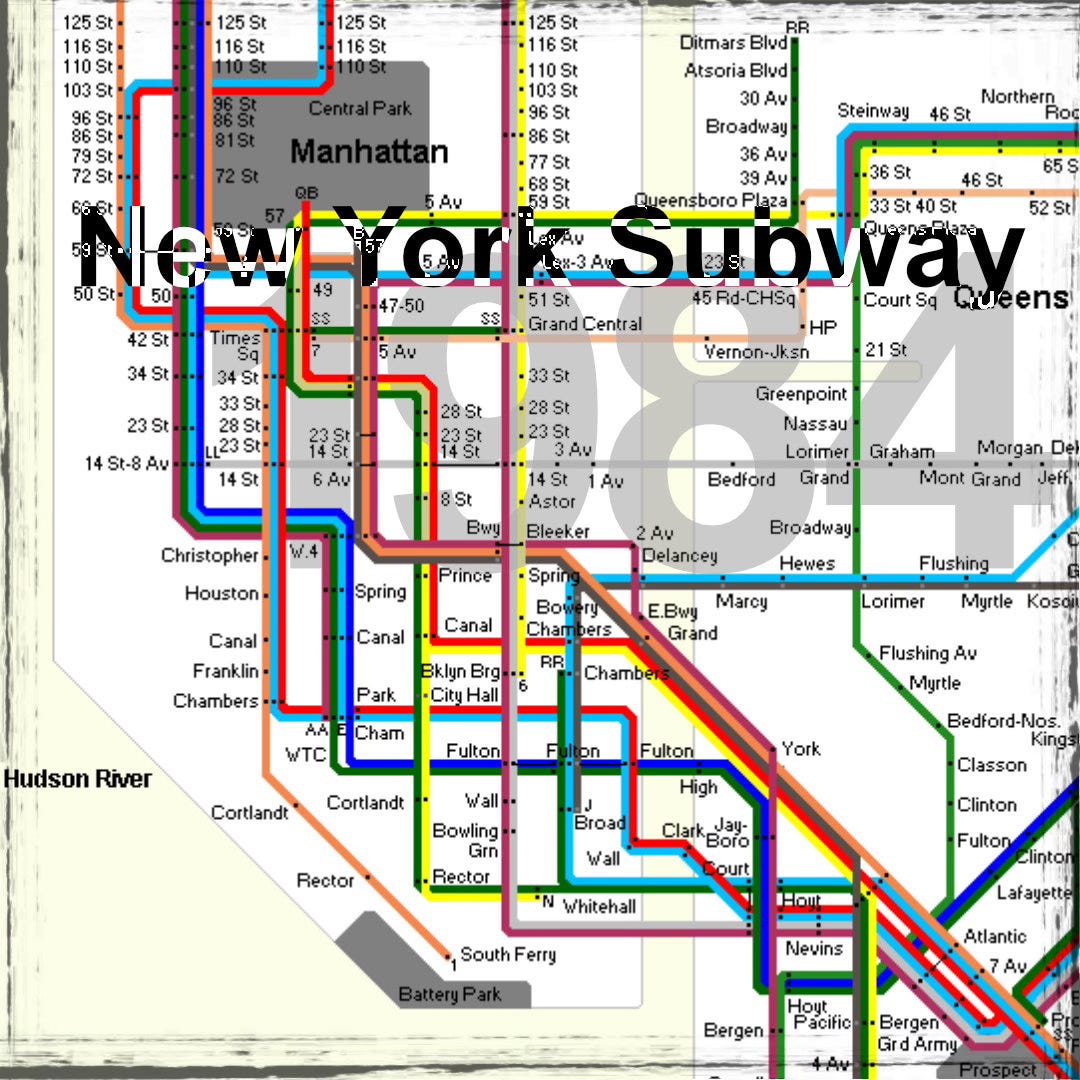
Every Sunday night that I passed by, I saw him there. He stood in front of a convenience store at the exit of the Christopher Street subway station. That is the Christopher Street in New York City. Manhattan, actually, to anyone who lives in New York City. For those who don’t live in the City, it’s all New York City. But for New Yorkers, the City is five distinct boroughs. Not all boroughs are the same. The Christopher Street subway station was a stop on the 1 Train; the subway train I always took to and from Penn Station for weekend and holiday trips home from college. Christopher Street was not the closest subway station to my dorm on 10th Street and Broadway. I kept using it because it was familiar. It was the first train I learned to take to Penn Station. Plus, the subway map in the 1980’s was so difficult to read. I didn’t have the energy to try and figure it out. I had more pressing worries. So, I stuck to the 1 Train: my routine connecting me to home, to safety.
The City was overwhelming to me in the early 80’s. I didn’t understand how to be an urbanite. I was from the suburbs. I was from the suburbs of another city entirely: Philadelphia. As a Philadelphian, I carried a chip on my shoulder toward the arrogance of New Yorkers. New York was not just a city. To New Yorkers it was The City. Moving to New York made me a traitor. I was double-crossing my Philly roots and identity. New York knew I was an imposter, but the 1 Train accepted me with open doors. It became my security blanket, and I clung to it. The ritual of the walk to and from Christopher Street was reassuring like faith in a religion.
My fear kept me from exploring more convenient alternatives. There was the 8th Street and Broadway subway station just two blocks from where I lived. That station served the N Train. And while I could have used the N to or from Penn Station at 34th Street, I was too fearful to experiment. I was comfortable on the 1 Train. The N Train was foreign. A different religion.
One time I did try the 3 Train which ran on the same line as my 1 Train, but the 3 Train is an express. It doesn’t stop at Christopher Street. I realized this too late and had to pass my station and go all the way down to Chambers Street. Mistakes like this in New York City in the 80’s could be life threatening. Or so my fear told me. So, I puffed myself up with false bravado and acted like a startled house cat. “Yes, I meant to do that. Everything’s cool.”
There were also the A, C, and E trains which could have let me off at West 4th Street - a much shorter walk. I did take the A, C, and E trains to other parts of the City but mostly with friends who knew the system better than I did. And while the A, C, and E trains did stop at Penn Station, my fear didn’t let them become part of my safe and predictable habit. It was the 1 Train and Christopher Street for me.
So it was that on this particular Sunday night in February 1984 after climbing the steps of the Christopher Street station into the chilly air, I was greeted with the familiar and comforting baritone voice of the poet. “D’ya like po-tree?” he asked me. Previous times when I passed him, I would simply smile and walk on. I don’t know why that night was different. Maybe I felt that I owed him one. He added to the certainty of my ritual. I could count on his presence there, comforting. He was part of my religion.
“D’ya like po-tree?”
“Sure,” I replied.
He handed me a light-blue colored booklet from the short stack in his hand. The booklet was home-made from four or five sheets of copy paper folded in half with two staples down the center.
“Two dollars,” he said.
I nodded and handed him the money.
He smiled and said, “Enjoy!”
I thanked him and walked on tucking the booklet into my coat.
It was several days later when I discovered his pamphlet on my desk under some school homework. I picked it up and looked at it closely for the first time. It was indeed home-made. He had written his poems on a typewriter, copied the pages, collated them with the blue cover sheet, put two staples in the center, then folded the bundle in half. He was a pioneer of modern self-publishing. Or he was an artifact of how publishing was done centuries ago. In that moment, I figured he was the latter.
He was writing poetry for god’s sake! For most writers finding a publisher is like a solo backpacking trip in the rain. But publishing poetry is an expedition into the rarefied air of Mount Everest. Of course he had to self-publish!
But it was poetry! I never liked poetry. Why did I spend two of my dollars on xeroxed pages of typewritten poems? That money could have bought me a beer! I looked at the booklet closer. The title page simply read:
POETRY
by
(I can’t even remember his name)
Inside were a variety of poems none of which I remember landing on me, if I read any of them entirely at all. I don’t remember if it was good poetry or bad poetry. I wouldn’t have been able to tell the difference anyway. What I do remember is feeling like I didn’t have the energy to try and figure it out. It takes effort to read poetry. All my extra energy was being sucked up by fear. Fear of being taken advantage of in this city; fear I wasn’t good enough among the posturing egos of the other film students; fear of making the wrong choices; fear of the precipice of adulthood. Poetry? That was too much work. Give me a simple story instead. A story that I don’t have to work at to understand. Give me something that can calm my anxiety. “I’m tired!” I thought. I tossed the booklet into the trash with arrogance and more than a little bit of guilt.
After that, I started using the 3 Train to the 14th Street station. My remorse in dismissing his writing would be all over my face if I passed him again. That fear was worse than the fear of the 14th Street station.
This morning, I sit and wonder about that man. I consider my fear compared to his confidence. His confidence to write poetry and stand on the street corner to personally sell his poetry one-by-one to strangers. Strangers who mostly rejected his offer until one of them succumbed and paid him two dollars. Paid him out of curiosity, or pity? It didn’t seem to matter to him. He was sharing his words, his soul. That must have made him happy. His persistence tells me he didn’t let doubt or rejection stop him. He didn’t like poetry, he loved poetry.
As I write this, I realize that I have become this man. I’m now the age he was then - or at least the age I imagined him to be. Like him, I’m trying to sell my writing, not from the din of a city street corner, but here in the crowded algorithmic chaos that is Substack. My memory of him serves as a reminder to be fearless. If he could brave the cold, critical streets of Manhattan to sell his poetry, I can courageously write and self-publish my stories from the comfort of my home office.
“Do you like short stories? Six dollars.”

I so love your honesty and ability to look deeply into yourself. It’s easier to do in retrospect of course, but those old lessons give us experiential evidence that we too can do things that are hard & out of our comfort zone.
I also enjoy getting to know you more & more through your stories. You’re an amazing man!
What a great read for my Valentine's morning. I love the detail of the subway connections. Felt like I was there. Fabulous. Impactful.